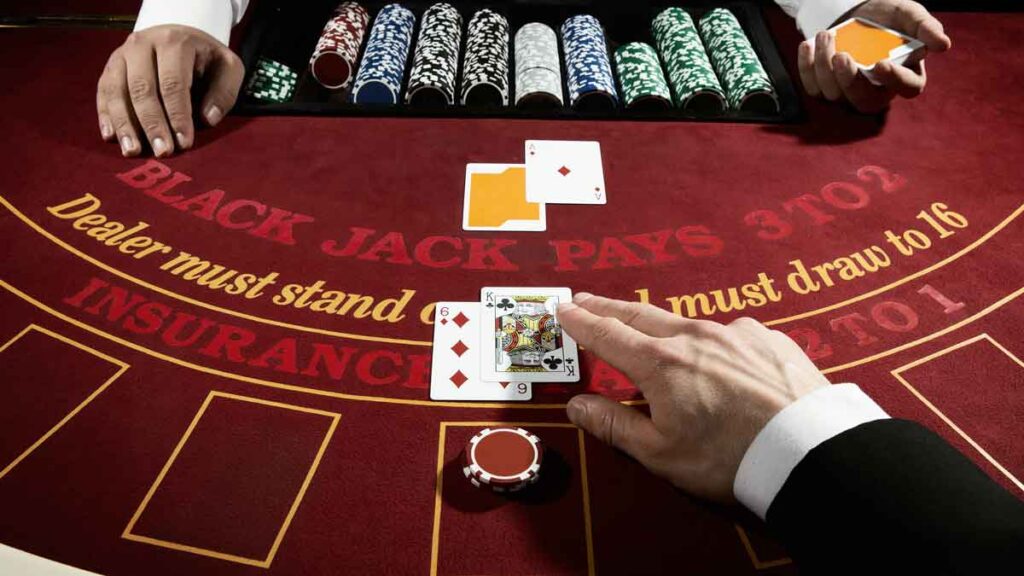
Blackjack, also known as 21, is a popular casino card game where the goal is to beat the dealer by having a hand value closer to 21 without going over.
Blackjack Strategy Guide: Tips to Beat the House

1. Use Basic Strategy
Basic strategy is a mathematically proven decision guide that minimizes the house edge. By following it, you can reduce the house advantage to less than 1%.
Some core rules:
| Your Hand | Dealer’s Upcard | Recommended Action |
|---|---|---|
| 8 or less | Any | Hit |
| 12–16 | 2–6 | Stand |
| 12–16 | 7–Ace | Hit |
| 17 or more | Any | Stand |
| Ace + 7 (Soft 18) | 9–Ace | Hit or Double |
| Pair of 8s | Any | Split |
| Pair of 10s | Any | Do Not Split |
Tip: You can find full basic strategy charts online to print or study before playing.
2. Splitting Pairs
Understanding when to split pairs can significantly improve your odds.
- Always split Aces (A-A) and 8s (8-8)
- Never split 10s (10-10) or 5s (5-5) — 10-10 is already a strong hand, and 5-5 is better used to double down
3. Doubling Down
Doubling down allows you to double your initial bet in exchange for receiving only one more card.
Best times to double down:
- When you have 10 or 11, and the dealer is showing a weak upcard (2 through 6)
Example: You have 10 and the dealer shows 4 — double down.
4. Avoid the Insurance Bet
If the dealer shows an Ace, you’ll be offered insurance — a side bet that pays 2:1 if the dealer has blackjack.
Statistically, insurance is a losing bet in the long run and should be avoided.
5. Know When to Surrender
Some casinos allow you to “surrender” your hand, forfeiting half your bet before playing the hand out.
This can be a smart move in very poor matchups, such as a hard 16 against a dealer’s 10 or Ace.
6. Manage Your Bankroll and Emotions
- Set a maximum loss and stick to it
- Decide in advance how much profit is enough before walking away
- Don’t increase your bets out of frustration
- Play with a clear mind and follow your plan
7. Common Mistakes to Avoid
- Standing on 12 when the dealer shows a 2 (statistically better to hit)
- Believing that “you’re due for a win” — Blackjack is based on probabilities, not superstition
- Mimicking other players’ decisions without understanding the odds
- Misplaying soft hands (like Ace + 6)
8. Optional Advanced Strategy: Card Counting
Card counting involves tracking the ratio of high to low cards left in the shoe. When more high cards remain, the odds slightly shift in the player’s favor.
While card counting is legal, most casinos will ban players suspected of using this technique.




Latest News